
Back to All Posts
Fun Finger Guitar Exercises for Speed and Strength
Published on 06 September, 2024
... by Arijit De

Hey there, future guitar superstars! Whether you’re just starting on your guitar journey or looking to add some pizzazz to your practice routine, you’re in the right place. Today, we’re diving into the joyful world of guitar finger exercises. These exercises are not only essential for playing well but also for making your practice sessions fun and engaging!
Guitarists often struggle with finger strength and coordination, which are crucial for mastering the instrument.
- Dexterity: Finger dexterity is crucial for guitarists. It allows for smoother transitions between chords and notes. Improved dexterity enhances speed and accuracy. This skill can elevate your playing to new heights.
- Strength: Many guitarists overlook finger strength. Yet, it plays a vital role in performance. Strong, flexible fingers enable you to tackle complex pieces effortlessly.
Building finger dexterity and strength through guitar exercises is essential for every guitarist. Effective exercises enhance your playing technique and overall performance.
Focusing on specific exercises can significantly improve your skills. Simple finger drills, scales, and chord changes train your fingers to move independently and accurately. Consistent practice leads to better control and speed.
1. Wiggle Those Fingers! The Magic of Finger Warm-Ups

Just like athletes warm up their bodies, guitarists need to warm up their fingers. Finger warm-ups help in improving blood circulation and preparing your muscles for more complex movements.
Techniques to Try
- Spider Walk: Place your fingers on the fretboard and “walk” them up and down. This not only warms up your fingers but also improves finger independence.
- Finger Stretches: Stretching your fingers wide apart and then bringing them back together can enhance flexibility.
Benefits
- Reduces injury risk during playing.
- Improves agility and dexterity.
- Prepares your fingers for more extended practice sessions.
Finger Independence Exercises
Building finger dexterity is crucial for guitar players. Finger independence exercises help strengthen each finger. This training allows for fluid movement across the fretboard. Here are two effective exercises to enhance your finger independence.
One-finger-per-fret Drills
This exercise focuses on using one finger per fret. It improves finger strength and agility. Here's how to do it:
- Choose a simple scale, like the C major scale.
- Position your fingers on frets as follows:
| Finger | Fret |
| Index | 1 |
| Middle | 2 |
| Ring | 3 |
| Pinkie | 4 |
Play each note slowly. Focus on keeping the other fingers still. Gradually increase speed as you improve. Repeat this for all strings. This builds both strength and coordination.
Contrary Motion Workouts
Contrary motion workouts develop finger independence and coordination. This involves moving fingers in opposite directions. Here’s a simple method:
- Place your index finger on the first fret of the low E string.
- Simultaneously, place your pinkie on the fourth fret of the high E string.
- Play both notes together.
Next, move your fingers down one fret:
- Index on the second fret of the low E string.
- Pinkie on the fifth fret of the high E string.
Continue this pattern. This exercise trains each finger to move independently. It helps with complex chord changes and solos.
Practice these finger independence exercises daily. They will greatly improve your guitar playing skills.
2. Speedy Gonzales: Building Finger Speed

Want to play those blistering solos? Speed is your friend! But don’t worry, it doesn’t require magic—just some dedicated practice.
Techniques to Try
- Chromatic Exercises: Play each note in sequence, moving up and down the fretboard. This not only helps with speed but also with muscle memory.
- Metronome Practice: Use a metronome to gradually increase your playing speed without sacrificing accuracy.
Benefits
- Enhances speed without losing control.
- Promotes accurate finger placement.
- Helps in building rhythmic consistency.
Four-finger Chromatic Warm-up
The four-finger chromatic warm-up is an essential exercise. It targets each finger and promotes strength. Follow these steps:
- Start on the 5th fret of the low E string.
- Use your index finger for the 5th fret.
- Use your middle finger for the 6th fret.
- Use your ring finger for the 7th fret.
- Use your pinky for the 8th fret.
Play each note slowly and clearly. Repeat this on every string. Here’s a simple table to follow:
| String | Fret | Finger |
| E (Low) | 5 | Index |
| E (Low) | 6 | Middle |
| E (Low) | 7 | Ring |
| E (Low) | 8 | Pinky |
| A | 5 | Index |
| A | 6 | Middle |
| A | 7 | Ring |
| A | 8 | Pinky |
Practice this exercise for 10-15 minutes daily. It boosts finger independence and strength.
3. The Dance of Dexterity: Mastering Finger Dexterity

Dexterity is all about control and precision. It’s the secret sauce behind those smooth chord transitions and intricate riffs.
Techniques to Try
- Scales Practice: Regularly practice major and minor scales. This helps improve finger coordination and musical understanding.
- Finger Independence Drills: Try exercises where each finger presses different frets sequentially. This can help in strengthening each finger individually.
Benefits
- Improves finger coordination and independence.
- Enables smooth chord transitions.
- Enhances overall playing accuracy.
4. The Flexibility Fiesta: Stretch and Strengthen
Flexibility exercises are key to playing more comfortably and efficiently. They allow you to reach those far-off frets with ease and confidence.
Techniques to Try
- Finger Yoga: Gently bend your fingers back and forth, and stretch them sideways. This can significantly improve hand flexibility.
- Finger Gyms: Squeeze a soft ball or use finger strengtheners to build up hand strength.
Benefits
- Enhances finger reach and stretch.
- Improves overall hand strength.
- Makes playing less physically demanding.
5. Finger Games: Fun Exercises to Keep You Engaged
Who says exercises have to be boring? Let's turn them into fun games!
Techniques to Try
- Finger Twister: Randomly pick a fret and string, then try to reach it with a specified finger. This can help in improving accuracy and finger placement.
- Chord Hunt: Pick a song and try to transition between chords as quickly and accurately as possible. This is great for developing muscle memory and speed.
Benefits
- Keeps practice sessions fun and engaging.
- Boosts motivation and interest.
- Enhances overall playing skills through play.
Developing A Personalized Practice Routine
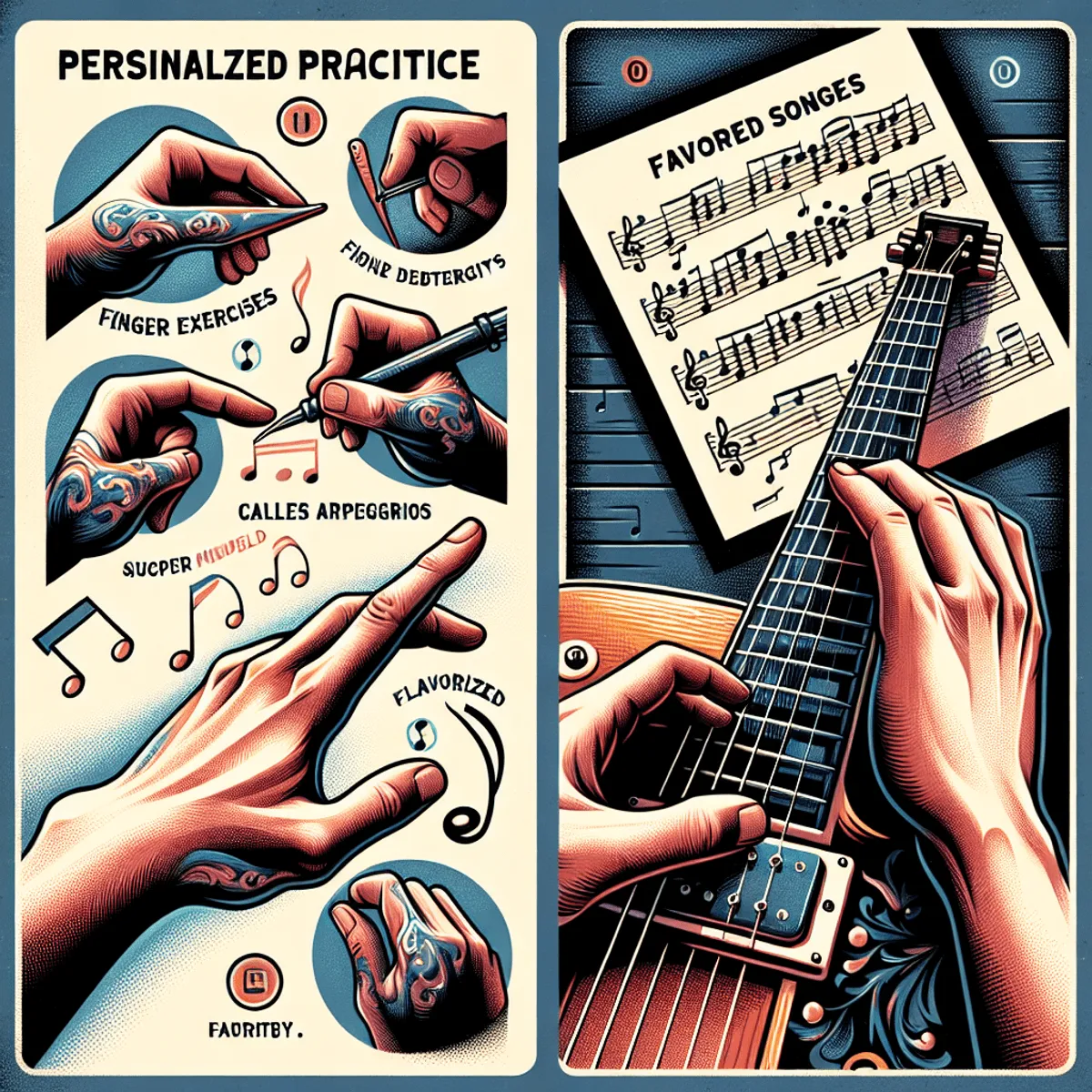
Creating a personalized practice routine helps improve finger dexterity and strength. A tailored approach keeps you motivated and engaged. Focus on your unique needs and goals. This will make your practice sessions effective and enjoyable.
Setting Realistic Goals For Progress
Setting achievable goals is essential. Break larger objectives into smaller tasks. This helps track progress easily and keeps you motivated.
- Short-term goals: Focus on specific techniques.
- Medium-term goals: Learn a song or a solo.
- Long-term goals: Master a style or technique.
Here’s a simple table to illustrate goal-setting:
| Goal Type | Example | Time Frame |
| Short-term | Play a scale smoothly | 1 week |
| Medium-term | Learn a full song | 1 month |
| Long-term | Master fingerstyle | 6 months |
Balancing Drills With Musical Pieces
Mixing technical drills with musical pieces keeps practice enjoyable. Use drills to build strength and dexterity. Follow up with songs to apply what you've learned.
- Drills: Finger exercises, scales, arpeggios.
- Musical pieces: Your favorite songs, genres you love.
Try this practice structure:
- Warm-up with finger exercises for 10 minutes.
- Spend 15 minutes on scales.
- Play a song for 20 minutes.
- Finish with a cool-down exercise.
This balance keeps your routine fun and effective. It also helps you see real progress.
Applying Drills To Song Playing
Utilizing finger drills within songs helps reinforce skills. Here are some effective methods:
- Choose Simple Songs: Start with easy songs that use basic chords.
- Focus on Finger Patterns: Identify unique patterns in the song.
- Isolate Sections: Work on difficult parts separately.
Strategies For Continued Improvement

Improvement requires focus and strategy. Here are some effective methods:
- Set Specific Goals: Aim for small, achievable targets.
- Vary Your Routine: Change exercises to keep things fresh.
- Seek Feedback: Ask for advice from teachers or peers.
- Record Yourself: Listen to your playing to identify areas for growth.
When you hit a plateau, try these strategies:
- Take a short break. This can refresh your mind.
- Focus on a specific technique. Master it before moving on.
- Practice slowly. Speed will come with time.
- Try new genres or styles. They can spark creativity.
Tracking your progress and implementing these strategies will help you build strength and dexterity. Stay committed and celebrate every small victory.
The importance of guitar finger exercises cannot be overstated, especially for beginners. These exercises help develop flexibility, speed, dexterity, and strength in a fun and engaging way. So, grab your guitar and start strumming your way to success with these joyful exercises!
Reach out or just say Hi
© BollyGuitar Classes 2024. All rights reserved.